Buy gisd.eu ?
We are moving the project
gisd.eu .
Are you interested in purchasing the domain
gisd.eu ?
domain@kv-gmbh.de · 0541-91531010
Buy gisd.eu ?
Why do I not have an internet connection on the Teltonika RUT240 with a Telekom SIM card?
There could be several reasons why you do not have an internet connection on the Teltonika RUT240 with a Telekom SIM card. Some possible reasons could be that the SIM card is not activated or properly inserted, the APN settings are incorrect, the device is out of network coverage, or there could be an issue with the device's hardware or software. It is recommended to check the SIM card activation, ensure the correct APN settings are configured, and verify that the device is within network coverage. If the issue persists, contacting the Telekom customer support or the device manufacturer for further assistance may be necessary. **
Should Germany build 7G networks? (Survey on internet technology)
Germany should consider building 7G networks in the future, as it would provide faster and more reliable internet connectivity for its citizens and businesses. However, it is important to carefully assess the potential benefits and drawbacks of 7G technology, including its impact on privacy, security, and environmental sustainability. Additionally, Germany should prioritize investing in and expanding 5G networks to ensure widespread access before moving on to 7G. Overall, the decision to build 7G networks should be made with thorough consideration of the technological, economic, and social implications. **


Similar search terms for Teltonika-Networks-Teltonika-SWM280
Top-Angebote
Products related to Teltonika-Networks-Teltonika-SWM280:


-
What is the relationship between local and global computer networks?
Local computer networks are smaller networks that are limited to a specific geographic area, such as a home, office, or campus. Global computer networks, on the other hand, are vast networks that connect people and resources across the world, such as the internet. Local networks often serve as the building blocks for global networks, as they connect individual devices and systems to larger networks that enable communication and data sharing on a global scale. Global networks rely on local networks to facilitate the transfer of information between devices and users in different locations. **
-
What is the connection between computer science and networks?
Computer science and networks are closely connected as computer science deals with the study of algorithms, data structures, and the principles of computing, while networks involve the communication between multiple devices. Computer scientists use their knowledge to design and develop network protocols, security measures, and efficient data transmission techniques. Understanding computer science is essential for creating and maintaining networks, as it provides the foundation for developing software and hardware solutions to support network infrastructure. In essence, computer science is the backbone of networks, enabling the efficient transfer of data and communication between devices. **
-
What are data networks and what are they needed for?
Data networks are systems that allow multiple computers and devices to communicate and share information with each other. They are needed for various reasons, such as enabling communication between users, facilitating the sharing of resources like printers and files, and providing access to the internet. Data networks are essential for businesses to operate efficiently, for individuals to stay connected, and for organizations to access and exchange information in real-time. **
-
What are social networks?
Social networks are online platforms that allow individuals to connect and interact with others, share information, and build relationships. These platforms enable users to create profiles, share updates, photos, and videos, and communicate with others through messaging and comments. Social networks have become an integral part of modern society, providing a virtual space for people to stay connected, collaborate, and engage with a wider community. **

What are reciprocal networks?
Reciprocal networks are a type of relationship or connection between individuals or organizations where there is mutual exchange or cooperation. In a reciprocal network, each party provides support, resources, or benefits to the other, and both parties receive similar benefits in return. These networks are based on the principle of reciprocity, where there is a mutual give-and-take relationship. Reciprocal networks can be found in various contexts, such as business partnerships, social relationships, or community collaborations. **
Whose networks are these?
Without specific context, it is difficult to determine whose networks are being referred to. Networks could belong to a variety of entities, such as individuals, businesses, organizations, or governments. It would be helpful to have more information about the specific networks in question in order to accurately identify their owner or operator. **
Top-Angebote
Products related to Teltonika-Networks-Teltonika-SWM280:
-
Why do I not have an internet connection on the Teltonika RUT240 with a Telekom SIM card?
There could be several reasons why you do not have an internet connection on the Teltonika RUT240 with a Telekom SIM card. Some possible reasons could be that the SIM card is not activated or properly inserted, the APN settings are incorrect, the device is out of network coverage, or there could be an issue with the device's hardware or software. It is recommended to check the SIM card activation, ensure the correct APN settings are configured, and verify that the device is within network coverage. If the issue persists, contacting the Telekom customer support or the device manufacturer for further assistance may be necessary. **
-
Should Germany build 7G networks? (Survey on internet technology)
Germany should consider building 7G networks in the future, as it would provide faster and more reliable internet connectivity for its citizens and businesses. However, it is important to carefully assess the potential benefits and drawbacks of 7G technology, including its impact on privacy, security, and environmental sustainability. Additionally, Germany should prioritize investing in and expanding 5G networks to ensure widespread access before moving on to 7G. Overall, the decision to build 7G networks should be made with thorough consideration of the technological, economic, and social implications. **
-
What is the relationship between local and global computer networks?
Local computer networks are smaller networks that are limited to a specific geographic area, such as a home, office, or campus. Global computer networks, on the other hand, are vast networks that connect people and resources across the world, such as the internet. Local networks often serve as the building blocks for global networks, as they connect individual devices and systems to larger networks that enable communication and data sharing on a global scale. Global networks rely on local networks to facilitate the transfer of information between devices and users in different locations. **
-
What is the connection between computer science and networks?
Computer science and networks are closely connected as computer science deals with the study of algorithms, data structures, and the principles of computing, while networks involve the communication between multiple devices. Computer scientists use their knowledge to design and develop network protocols, security measures, and efficient data transmission techniques. Understanding computer science is essential for creating and maintaining networks, as it provides the foundation for developing software and hardware solutions to support network infrastructure. In essence, computer science is the backbone of networks, enabling the efficient transfer of data and communication between devices. **
Similar search terms for Teltonika-Networks-Teltonika-SWM280
-
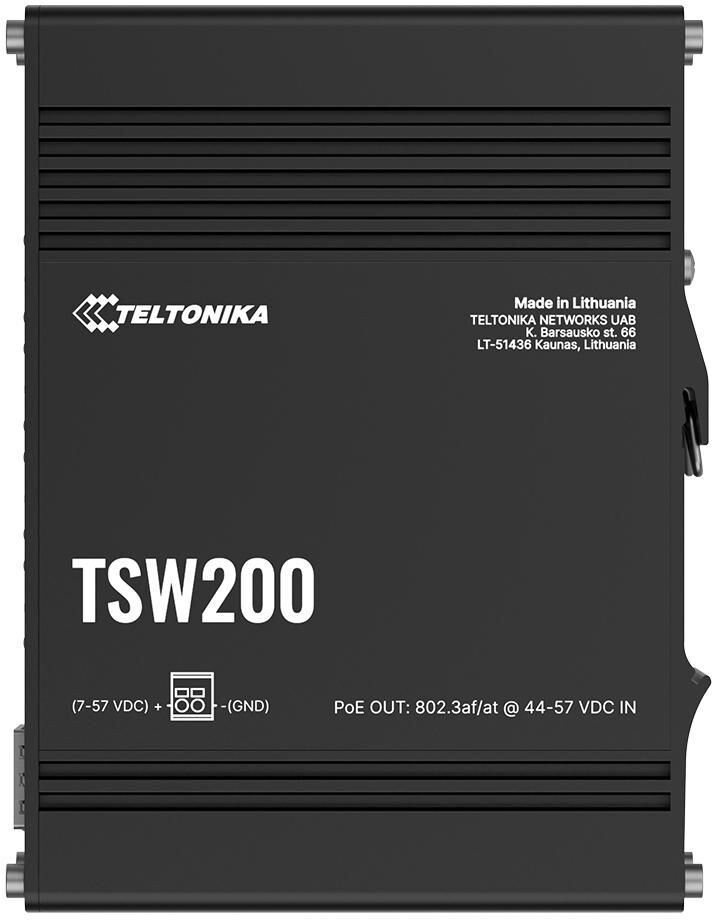
Teltonika Networks Teltonika TSW200 8-Port Industrial PoE+ Switch with 2x SFP (No PSU)Teltonika Networks TSW200 industrial unmanaged Gigabit switch with 8 PoE+ ports and 2 SFP ports for fibre uplinks. Supplied without a power supply, with DIN-rail mounting.117,49 £*Shipping: 0,00 £Secure redirect to the provider
-
What are data networks and what are they needed for?
Data networks are systems that allow multiple computers and devices to communicate and share information with each other. They are needed for various reasons, such as enabling communication between users, facilitating the sharing of resources like printers and files, and providing access to the internet. Data networks are essential for businesses to operate efficiently, for individuals to stay connected, and for organizations to access and exchange information in real-time. **
-
What are social networks?
Social networks are online platforms that allow individuals to connect and interact with others, share information, and build relationships. These platforms enable users to create profiles, share updates, photos, and videos, and communicate with others through messaging and comments. Social networks have become an integral part of modern society, providing a virtual space for people to stay connected, collaborate, and engage with a wider community. **
-
What are reciprocal networks?
Reciprocal networks are a type of relationship or connection between individuals or organizations where there is mutual exchange or cooperation. In a reciprocal network, each party provides support, resources, or benefits to the other, and both parties receive similar benefits in return. These networks are based on the principle of reciprocity, where there is a mutual give-and-take relationship. Reciprocal networks can be found in various contexts, such as business partnerships, social relationships, or community collaborations. **
-
Whose networks are these?
Without specific context, it is difficult to determine whose networks are being referred to. Networks could belong to a variety of entities, such as individuals, businesses, organizations, or governments. It would be helpful to have more information about the specific networks in question in order to accurately identify their owner or operator. **
* All prices are inclusive of VAT and, if applicable, plus shipping costs. The offer information is based on the details provided by the respective shop and is updated through automated processes. Real-time updates do not occur, so deviations can occur in individual cases. ** Note: Parts of this content were created by AI.