Buy gisd.eu ?
We are moving the project
gisd.eu .
Are you interested in purchasing the domain
gisd.eu ?
domain@kv-gmbh.de · 0541-91531010
Buy gisd.eu ?
What are the orthographic principles of the lexical and textual principles?
The orthographic principles of lexical and textual principles refer to the rules and conventions governing the correct spelling, punctuation, and formatting of words and sentences in written language. Lexical principles focus on the correct spelling and usage of individual words, including understanding prefixes, suffixes, and root words. Textual principles, on the other hand, involve the correct organization and structure of sentences and paragraphs, including proper punctuation, capitalization, and paragraphing to ensure clarity and coherence in written communication. Both sets of principles are essential for effective written communication and help ensure that written texts are clear, accurate, and easy to read. **
What are the Apollonian and Dionysian principles?
The Apollonian and Dionysian principles are concepts introduced by Friedrich Nietzsche in his book "The Birth of Tragedy." The Apollonian represents order, rationality, and harmony, while the Dionysian represents chaos, irrationality, and ecstasy. These principles are seen as opposing forces that are essential in the creation of art and culture, with the Apollonian providing structure and form, and the Dionysian providing passion and emotion. Nietzsche believed that a balance of these principles was necessary for the creation of great works of art and for a fulfilling life. **

Similar search terms for Elsevier-Davidsons-Principles-and
Top-Angebote
Products related to Elsevier-Davidsons-Principles-and:
-
Simon & Schuster Principles Life and Work, Principles Your Guided Journal 2 Books Collection SetPrinciples: Life and Work, Principles Your Guided Journal 2 Books Collection Set Principles: Life and Work In Principles, Dalio shares what he’s learned over the course of his remarkable career. He argues that life, management, economics, and investing can all be systemized into rules and understood like machines. The book’s hundreds of practical lessons, which are built around his cornerstones of “radical truth” and “radical transparency,” include Dalio laying out the most effective ways for individuals and organizations to make decisions, approach challenges, and build strong teams. He also describes the innovative tools the firm uses to bring an idea meritocracy to life, such as creating “baseball cards” for all employees that distill their strengths and weaknesses, and employing computerized decision-making systems to make believability-weighted decisions. While the book brims with novel ideas for organizations and institutions, Principles also offers a clear, straightforward approach to decision-making that Dalio believes anyone can apply, no matter what they’re seeking to achieve. Principles: Your Guided Journal: With this new journal, Dalio takes his goal one step further to help readers reflect on and record their own principles. He does that by providing a series of guided exercises and questions for reflecting on what you’re like, what you value, and what principles will best help you achieve your goals. These exercises draw from key concepts in the original Principles book, including: 1. How to identify your strengths, weaknesses, motivations and preferences 2. How to use the 'five-step process' to achieve your goals 3. How to become both 'assertive and open-minded at the same time' 4. How to maximise your learning from your mistakes (which are inevitable)22,99 £*Shipping: 2,99 £Secure redirect to the provider
-
Simon and Schuster Ray Dalio Collection 3 Books Set (Principles Life and Work, Principles for Dealing with the Changing World Order, Principles Your Guided Journal)Ray Dalio Collection 3 Books Set (Principles Life and Work, Principles for Dealing with the Changing World Order, Principles Your Guided Journal) Principles Life and Work In Principles, Dalio shares what he’s learned over the course of his remarkable career. He argues that life, management, economics, and investing can all be systemized into rules and understood like machines. The book’s hundreds of practical lessons, which are built around his cornerstones of “radical truth” and “radical transparency,” include Dalio laying out the most effective ways for individuals and organizations to make decisions, approach challenges, and build strong teams. Principles for Dealing with the Changing World Order A few years ago, Ray Dalio noticed a confluence of political and economic conditions he hadn’t encountered before. They included huge debts and zero or near-zero interest rates that led to massive printing of money in the world’s three major reserve currencies; big political and social conflicts within countries, especially the US, due to the largest wealth, political and values disparities in more than 100 years; and the rising of a world power (China) to challenge the existing world power (US) and the existing world order. Principles Your Guided Journal In his international bestseller Principles, legendary investor Ray Dalio introduced millions of readers around the world to the unconventional approach he developed as the founder and builder of Bridgewater Associates, the largest and most successful hedge fund in the world. Dalio attributes his unique success to his process of recording, refining and acting on a set of well-defined principles, which are effectively decision-rules for getting what you want out of life and work.34,99 £*Shipping: 2,99 £Secure redirect to the provider
-
Simon & Schuster Principles and Principles for Dealing with the Changing World Order 2 Books Collection Set by Ray DalioRay Dalio Collection 2 Books Set (Principles Life and Work, Principles for Dealing with the Changing World Order): Principles Life and Work: In Principles, Dalio shares what he’s learned over the course of his remarkable career. He argues that life, management, economics, and investing can all be systemized into rules and understood like machines. The book’s hundreds of practical lessons, which are built around his cornerstones of “radical truth” and “radical transparency,” include Dalio laying out the most effective ways for individuals and organizations to make decisions, approach challenges, and build strong teams. Principles for Dealing with the Changing World Order: A few years ago, Ray Dalio noticed a confluence of political and economic conditions he hadn’t encountered before. They included huge debts and zero or near-zero interest rates that led to massive printing of money in the world’s three major reserve currencies; big political and social conflicts within countries, especially the US, due to the largest wealth, political and values disparities in more than 100 years; and the rising of a world power (China) to challenge the existing world power (US) and the existing world order.30,99 £*Shipping: 2,99 £Secure redirect to the provider
-
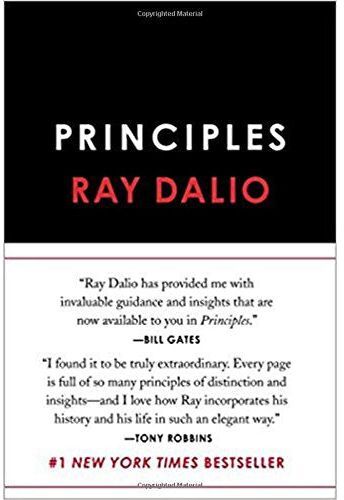
Simon & Schuster Principles: Life and Work by Ray Dalio#1 NEW YORK TIMES BESTSELLER * 5 MILLION COPIES SOLD “Significant...The book is both instructive and surprisingly moving.” —The New York Times Ray Dalio, one of the world’s most successful investors and entrepreneurs, shares the unconventional principles that he’s developed, refined, and used over the past forty years to create unique results in both life and business—and which any person or organization can adopt to help achieve their goals. In 1975, Ray Dalio founded an investment firm, Bridgewater Associates, out of his two-bedroom apartment in New York City. Forty years later, Bridgewater has made more money for its clients than any other hedge fund in history and grown into the fifth most important private company in the United States, according to Fortune magazine. Dalio himself has been named to Time magazine’s list of the 100 most influential people in the world. Along the way, Dalio discovered a set of unique principles that have led to Bridgewater’s exceptionally effective culture, which he describes as “an idea meritocracy that strives to achieve meaningful work and meaningful relationships through radical transparency.” It is these principles, and not anything special about Dalio—who grew up an ordinary kid in a middle-class Long Island neighborhood—that he believes are the reason behind his success. In Principles, Dalio shares what he’s learned over the course of his remarkable career. He argues that life, management, economics, and investing can all be systemized into rules and understood like machines. The book’s hundreds of practical lessons, which are built around his cornerstones of “radical truth” and “radical transparency,” include Dalio laying out the most effective ways for individuals and organizations to make decisions, approach challenges, and build strong teams. He also describes the innovative tools the firm uses to bring an idea meritocracy to life, such as creating “baseball cards” for all employees that distill their strengths and weaknesses, and employing computerized decision-making systems to make believability-weighted decisions. While the book brims with novel ideas for organizations and institutions, Principles also offers a clear, straightforward approach to decision-making that Dalio believes anyone can apply, no matter what they’re seeking to achieve. Here, from a man who has been called both “the Steve Jobs of investing” and “the philosopher king of the financial universe” (CIO magazine), is a rare opportunity to gain proven advice unlike anything you’ll find in the conventional business press.15,99 £*Shipping: 2,99 £Secure redirect to the provider
-
According to which principles is personnel selection carried out based on the minimal and maximal principles?
Personnel selection based on the minimal principle focuses on selecting candidates who meet the minimum requirements for the job, ensuring that they possess the necessary qualifications and skills. On the other hand, selection based on the maximal principle aims to identify candidates who not only meet the minimum requirements but also exceed them, possessing additional qualifications or skills that make them stand out from other applicants. By applying both principles, organizations can ensure they hire candidates who are both competent for the job and have the potential to excel in their roles. **
-
Should one stick to their principles and be foolish, or should one forget their principles and possibly become unhappy?
It is important to stick to one's principles, as they are the foundation of one's character and integrity. While it may seem foolish at times, compromising one's principles can lead to feelings of guilt and unhappiness. By staying true to one's values, one can maintain a sense of self-respect and inner peace, even in challenging situations. It is possible to find a balance between holding onto one's principles and making practical decisions, but compromising on core values is not the solution to finding happiness. **
-
What are the principles and implementation of homework?
The principles of homework are to reinforce and extend learning, develop independent study skills, and provide opportunities for students to practice and apply what they have learned in class. Homework should be purposeful, relevant, and manageable for students. It should also be differentiated to meet the needs of individual students. The implementation of homework involves clear communication of expectations, providing adequate time for students to complete assignments, and offering support and feedback. Teachers should also consider the balance of homework with other aspects of students' lives, such as extracurricular activities and family time. Additionally, it is important to regularly review and reflect on the effectiveness of homework assignments and make adjustments as needed. **
-
What do you think about people who stick to principles versus people with strong character and basic principles?
People who stick to principles are often seen as consistent and reliable, as they are committed to following a set of rules or beliefs. On the other hand, individuals with strong character and basic principles may be more adaptable and able to navigate complex situations with integrity. Both approaches have their strengths, and it ultimately depends on the context and individual values as to which is more important. **
What do you think about people who stick to principles versus people with strong character and core principles?
People who stick to principles are often seen as consistent and reliable, as they are committed to following a set of beliefs or values. On the other hand, individuals with strong character and core principles are admired for their ability to adapt and make decisions based on their own moral compass. Both types of people have their strengths, and it ultimately depends on the situation as to which approach is more beneficial. **
What do you think about people who stick to principles versus individuals with strong character and fundamental principles?
People who stick to principles may be seen as rigid and inflexible, potentially missing out on opportunities for growth and adaptation. On the other hand, individuals with strong character and fundamental principles are more likely to be adaptable and open-minded while still maintaining their core values. It is important to strike a balance between sticking to principles and being open to new perspectives in order to navigate the complexities of life effectively. **
Top-Angebote
Products related to Elsevier-Davidsons-Principles-and:
-
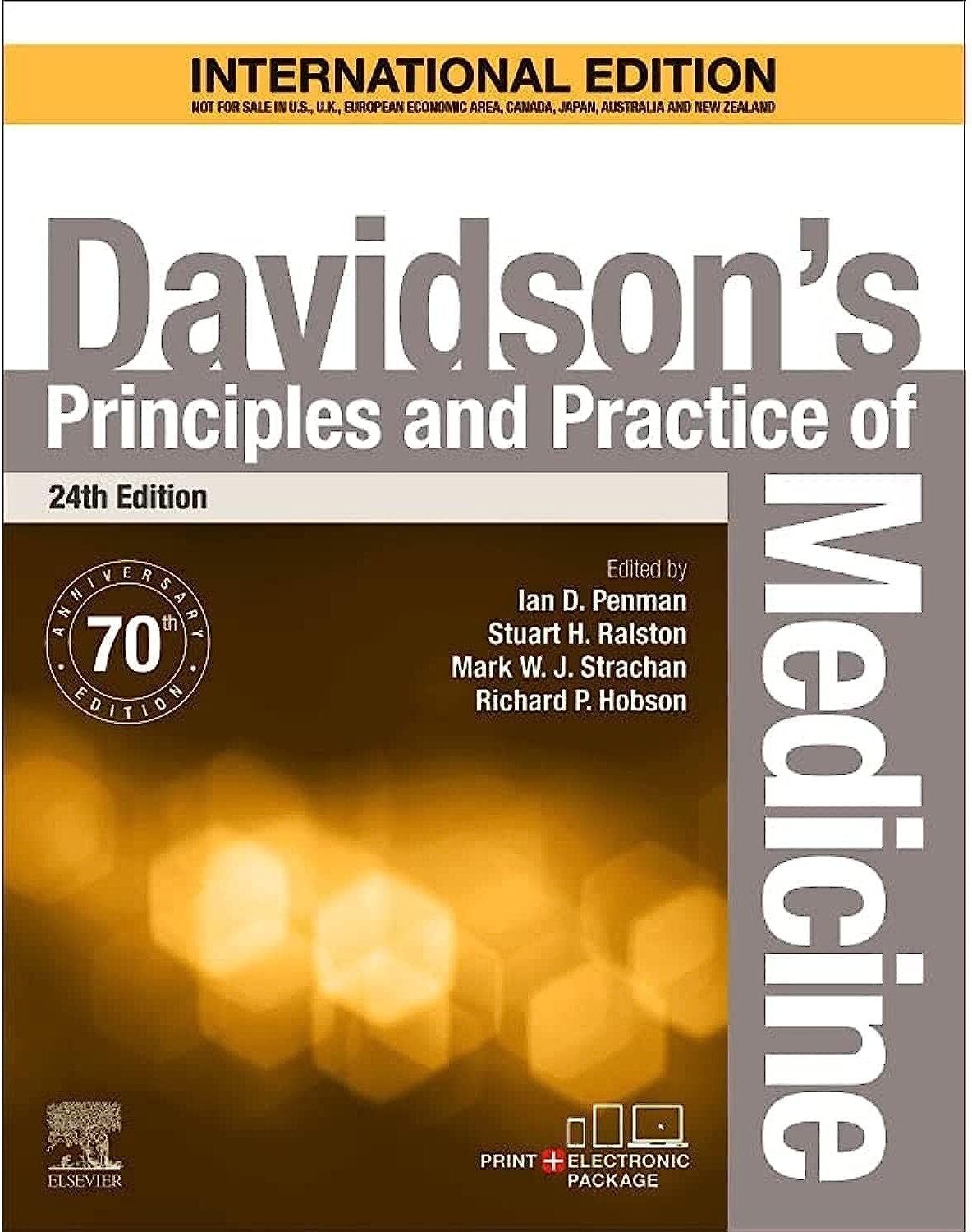
Elsevier Davidsons Principles and Practice of Medicine International EditionWell over two million medical students, doctors and other health professionals around the globe have owned a copy of Davidson’s Principles and Practice of Medicine since it was first published over 70 years ago. Now in its 24th Edition, this thoroughly updated textbook describes the pathophysiology and clinical features of the most frequently encountered conditions in the major specialties of adult medicine, and explains how to recognise, investigate, diagnose and manage them. Taking its origins from Sir Stanley Davidson’s much-admired lecture notes, Davidson’s has endured because it keeps pace with how modern medicine is taught and provides a wealth of trusted information in an easy-to-read, concise and beautifully illustrated format. Key features: Part 1 ‘Fundamentals of Medicine’ - provides an account of the principles of genetics, immunology, infectious diseases, population health, oncology and pain management, along with a discussion of the core principles behind clinical decision-making and good prescribing. Part 2 ‘Emergency and Critical Care Medicine’ - covers medical emergencies in poisoning, envenomation and medicine in austere environments, as well as common presentations in acute medicine and the recognition and management of the critically ill. Part 3 ‘Clinical Medicine’- covers the major medical specialties, each thoroughly revised and brought fully up to date. A new section on COVID-19 has been added and the impact of this infection is described throughout the book. Clinical Examination overviews - extended and updated to summarise the main elements for each system. Presenting Problems sections - provide a clear pathway for the assessment of and approach to the most common complaints in each specialty. Practice Point summaries - detail the practical skills that medical students and junior doctors must acquire. Emergency boxes - emphasise the core knowledge needed to manage acutely ill patients. In Old Age, In Pregnancy and In Adolescence boxes - highlight differences in the practice of medicine in these patient groups, and illustrate the interfaces between medical, obstetric and paediatric services. The text is extensively illustrated, with over 1000 diagrams, clinical photographs, and radiology and pathology images. The global perspective is enhanced by an International Advisory Board of experts from 11 countries and by leading authors from around the world.29,99 £*Shipping: 2,99 £Secure redirect to the provider
-
Elsevier Kumar and Clark's Clinical MedicineNow in its tenth edition, Kumar & Clark's Clinical Medicine is fully updated and revised under a new team of editors.Featuring new chapters covering: Diagnosis: the art of being a doctor - helping readers to develop a confident clinical method in interactions with patients Elderly medicine, frailty and multimorbidity Public health Surgery Evidence-based medicine Sepsis and the treatment of bacterial infection Haematological Oncology Venous thromboembolic disease Hypertension Men's health Enhanced clinical skills content has been added to most chapters - helping readers tailor history-taking and examination skills to specific specialty-based contexts.Bonus online content - including self-assessment, common clinical and international cases, cardiovascular and respiratory audio material, clinical examination videos and bite-sized topic pages covering major conditions.Heavily revised throughout with smaller chapters to ease navigation, added introductions and system overviews included for most chapters. Edited by Adam Feather, MBBS, FRCP, FAcadMEd; David Randall, MA, MRCP; and Mona Waterhouse, MA, MRCP. Contributors comprise consultants at the top of their fields, paired with younger doctors closer to the exam experience, to ensure authority and relevance. International Advisory Board, led by Professor Janaka de Silva and Professor Senaka Rajapakse, providing guidance for global coverage from across the world. Members of the International Advisory Board have contributed to the ebook with additional content to amplify areas of clinical importance in their parts of the world.Enhanced e-book accompanies the print book, for ease of transportation and use on the move. Featuring new chapters covering: o Diagnosis: the art of being a doctor - helping readers to develop a confident clinical method in interactions with patients o Geriatric medicine, frailty and multimorbidity o Public health o Surgery o Evidence-based medicine o Sepsis o Haematological Oncology o Venous thromboembolic disease o Hypertension o Men's health o Obstetric medicine Enhanced clinical skills content has been added to most chapters - helping readers tailor history-taking and examination skills to specific specialty-based contexts.33,99 £*Shipping: 2,99 £Secure redirect to the provider
-
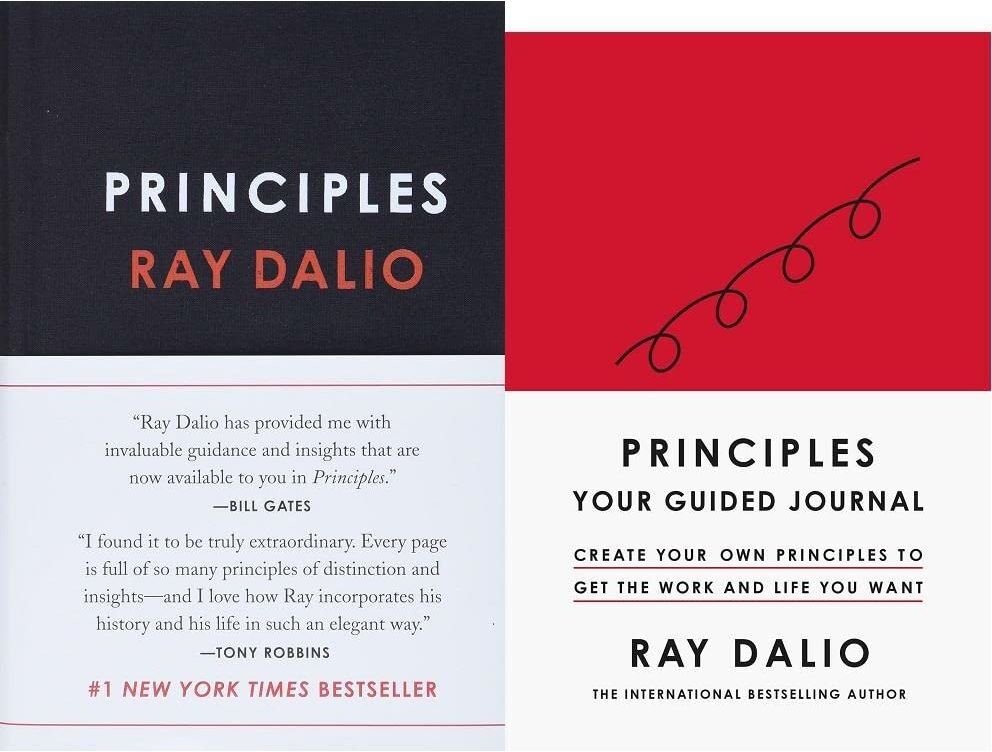
Simon & Schuster Principles Life and Work, Principles Your Guided Journal 2 Books Collection SetPrinciples: Life and Work, Principles Your Guided Journal 2 Books Collection Set Principles: Life and Work In Principles, Dalio shares what he’s learned over the course of his remarkable career. He argues that life, management, economics, and investing can all be systemized into rules and understood like machines. The book’s hundreds of practical lessons, which are built around his cornerstones of “radical truth” and “radical transparency,” include Dalio laying out the most effective ways for individuals and organizations to make decisions, approach challenges, and build strong teams. He also describes the innovative tools the firm uses to bring an idea meritocracy to life, such as creating “baseball cards” for all employees that distill their strengths and weaknesses, and employing computerized decision-making systems to make believability-weighted decisions. While the book brims with novel ideas for organizations and institutions, Principles also offers a clear, straightforward approach to decision-making that Dalio believes anyone can apply, no matter what they’re seeking to achieve. Principles: Your Guided Journal: With this new journal, Dalio takes his goal one step further to help readers reflect on and record their own principles. He does that by providing a series of guided exercises and questions for reflecting on what you’re like, what you value, and what principles will best help you achieve your goals. These exercises draw from key concepts in the original Principles book, including: 1. How to identify your strengths, weaknesses, motivations and preferences 2. How to use the 'five-step process' to achieve your goals 3. How to become both 'assertive and open-minded at the same time' 4. How to maximise your learning from your mistakes (which are inevitable)22,99 £*Shipping: 2,99 £Secure redirect to the provider
-
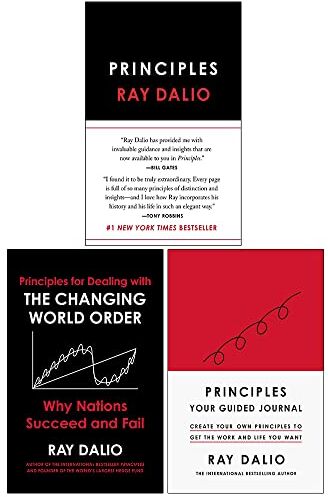
Simon and Schuster Ray Dalio Collection 3 Books Set (Principles Life and Work, Principles for Dealing with the Changing World Order, Principles Your Guided Journal)Ray Dalio Collection 3 Books Set (Principles Life and Work, Principles for Dealing with the Changing World Order, Principles Your Guided Journal) Principles Life and Work In Principles, Dalio shares what he’s learned over the course of his remarkable career. He argues that life, management, economics, and investing can all be systemized into rules and understood like machines. The book’s hundreds of practical lessons, which are built around his cornerstones of “radical truth” and “radical transparency,” include Dalio laying out the most effective ways for individuals and organizations to make decisions, approach challenges, and build strong teams. Principles for Dealing with the Changing World Order A few years ago, Ray Dalio noticed a confluence of political and economic conditions he hadn’t encountered before. They included huge debts and zero or near-zero interest rates that led to massive printing of money in the world’s three major reserve currencies; big political and social conflicts within countries, especially the US, due to the largest wealth, political and values disparities in more than 100 years; and the rising of a world power (China) to challenge the existing world power (US) and the existing world order. Principles Your Guided Journal In his international bestseller Principles, legendary investor Ray Dalio introduced millions of readers around the world to the unconventional approach he developed as the founder and builder of Bridgewater Associates, the largest and most successful hedge fund in the world. Dalio attributes his unique success to his process of recording, refining and acting on a set of well-defined principles, which are effectively decision-rules for getting what you want out of life and work.34,99 £*Shipping: 2,99 £Secure redirect to the provider
-
What are the orthographic principles of the lexical and textual principles?
The orthographic principles of lexical and textual principles refer to the rules and conventions governing the correct spelling, punctuation, and formatting of words and sentences in written language. Lexical principles focus on the correct spelling and usage of individual words, including understanding prefixes, suffixes, and root words. Textual principles, on the other hand, involve the correct organization and structure of sentences and paragraphs, including proper punctuation, capitalization, and paragraphing to ensure clarity and coherence in written communication. Both sets of principles are essential for effective written communication and help ensure that written texts are clear, accurate, and easy to read. **
-
What are the Apollonian and Dionysian principles?
The Apollonian and Dionysian principles are concepts introduced by Friedrich Nietzsche in his book "The Birth of Tragedy." The Apollonian represents order, rationality, and harmony, while the Dionysian represents chaos, irrationality, and ecstasy. These principles are seen as opposing forces that are essential in the creation of art and culture, with the Apollonian providing structure and form, and the Dionysian providing passion and emotion. Nietzsche believed that a balance of these principles was necessary for the creation of great works of art and for a fulfilling life. **
-
According to which principles is personnel selection carried out based on the minimal and maximal principles?
Personnel selection based on the minimal principle focuses on selecting candidates who meet the minimum requirements for the job, ensuring that they possess the necessary qualifications and skills. On the other hand, selection based on the maximal principle aims to identify candidates who not only meet the minimum requirements but also exceed them, possessing additional qualifications or skills that make them stand out from other applicants. By applying both principles, organizations can ensure they hire candidates who are both competent for the job and have the potential to excel in their roles. **
-
Should one stick to their principles and be foolish, or should one forget their principles and possibly become unhappy?
It is important to stick to one's principles, as they are the foundation of one's character and integrity. While it may seem foolish at times, compromising one's principles can lead to feelings of guilt and unhappiness. By staying true to one's values, one can maintain a sense of self-respect and inner peace, even in challenging situations. It is possible to find a balance between holding onto one's principles and making practical decisions, but compromising on core values is not the solution to finding happiness. **
Similar search terms for Elsevier-Davidsons-Principles-and
-
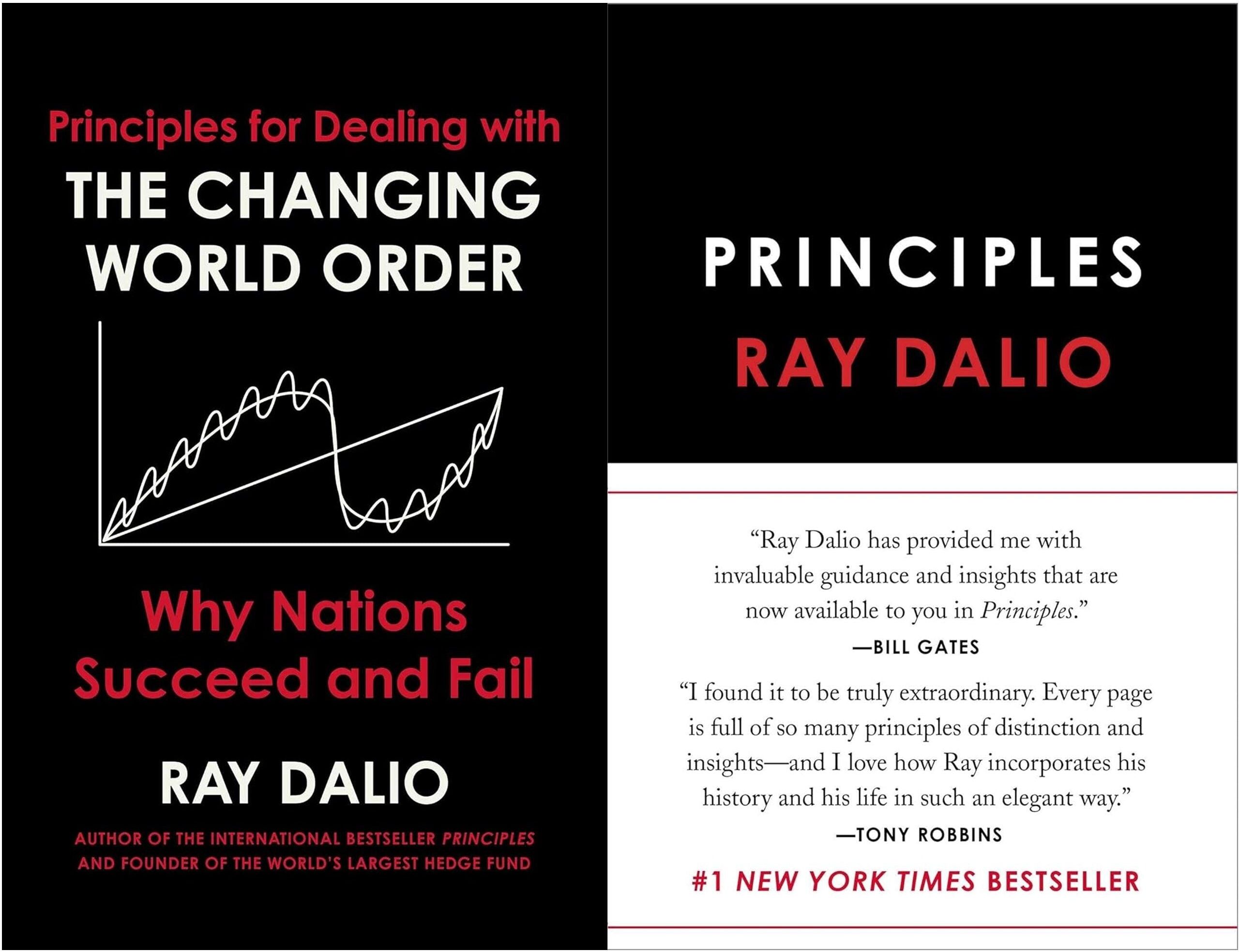
Simon & Schuster Principles and Principles for Dealing with the Changing World Order 2 Books Collection Set by Ray DalioRay Dalio Collection 2 Books Set (Principles Life and Work, Principles for Dealing with the Changing World Order): Principles Life and Work: In Principles, Dalio shares what he’s learned over the course of his remarkable career. He argues that life, management, economics, and investing can all be systemized into rules and understood like machines. The book’s hundreds of practical lessons, which are built around his cornerstones of “radical truth” and “radical transparency,” include Dalio laying out the most effective ways for individuals and organizations to make decisions, approach challenges, and build strong teams. Principles for Dealing with the Changing World Order: A few years ago, Ray Dalio noticed a confluence of political and economic conditions he hadn’t encountered before. They included huge debts and zero or near-zero interest rates that led to massive printing of money in the world’s three major reserve currencies; big political and social conflicts within countries, especially the US, due to the largest wealth, political and values disparities in more than 100 years; and the rising of a world power (China) to challenge the existing world power (US) and the existing world order.30,99 £*Shipping: 2,99 £Secure redirect to the provider
-
Simon & Schuster Principles: Life and Work by Ray Dalio#1 NEW YORK TIMES BESTSELLER * 5 MILLION COPIES SOLD “Significant...The book is both instructive and surprisingly moving.” —The New York Times Ray Dalio, one of the world’s most successful investors and entrepreneurs, shares the unconventional principles that he’s developed, refined, and used over the past forty years to create unique results in both life and business—and which any person or organization can adopt to help achieve their goals. In 1975, Ray Dalio founded an investment firm, Bridgewater Associates, out of his two-bedroom apartment in New York City. Forty years later, Bridgewater has made more money for its clients than any other hedge fund in history and grown into the fifth most important private company in the United States, according to Fortune magazine. Dalio himself has been named to Time magazine’s list of the 100 most influential people in the world. Along the way, Dalio discovered a set of unique principles that have led to Bridgewater’s exceptionally effective culture, which he describes as “an idea meritocracy that strives to achieve meaningful work and meaningful relationships through radical transparency.” It is these principles, and not anything special about Dalio—who grew up an ordinary kid in a middle-class Long Island neighborhood—that he believes are the reason behind his success. In Principles, Dalio shares what he’s learned over the course of his remarkable career. He argues that life, management, economics, and investing can all be systemized into rules and understood like machines. The book’s hundreds of practical lessons, which are built around his cornerstones of “radical truth” and “radical transparency,” include Dalio laying out the most effective ways for individuals and organizations to make decisions, approach challenges, and build strong teams. He also describes the innovative tools the firm uses to bring an idea meritocracy to life, such as creating “baseball cards” for all employees that distill their strengths and weaknesses, and employing computerized decision-making systems to make believability-weighted decisions. While the book brims with novel ideas for organizations and institutions, Principles also offers a clear, straightforward approach to decision-making that Dalio believes anyone can apply, no matter what they’re seeking to achieve. Here, from a man who has been called both “the Steve Jobs of investing” and “the philosopher king of the financial universe” (CIO magazine), is a rare opportunity to gain proven advice unlike anything you’ll find in the conventional business press.15,99 £*Shipping: 2,99 £Secure redirect to the provider
-
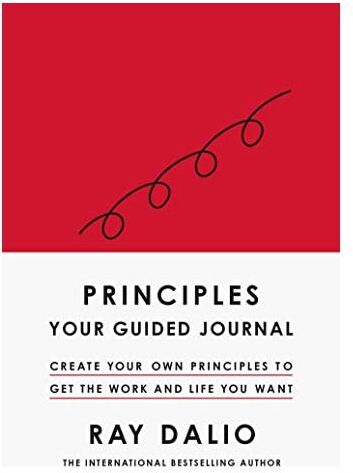
Simon & Schuster Principles: Your Guided Journal: Create Your Own Principles to Get the Work and Life You Want by Ray DalioIn his international bestseller Principles, legendary investor Ray Dalio introduced millions of readers around the world to the unconventional approach he developed as the founder and builder of Bridgewater Associates, the largest and most successful hedge fund in the world. Dalio attributes his unique success to his process of recording, refining and acting on a set of well-defined principles, which are effectively decision-rules for getting what you want out of life and work. His goal in publishing the book was to show readers the value of principle-based thinking so that they could develop their own principles, aligned with their own values, for getting whatever they wanted out of life. With this new journal, Dalio takes his goal one step further to help readers reflect on and record their own principles. He does that by providing a series of guided exercises and questions for reflecting on what you’re like, what you value, and what principles will best help you achieve your goals. These exercises draw from key concepts in the original Principles book, including: 1. How to identify your strengths, weaknesses, motivations and preferences 2. How to use the 'five-step process' to achieve your goals 3. How to become both 'assertive and open-minded at the same time' 4. How to maximise your learning from your mistakes (which are inevitable) All of these exercises can optionally be enhanced using the free Principles in Action iOS and Android app, which provides an even more interactive, multimedia experience, and they are followed by a number of blank journal pages containing thought-provoking and unconventional prompts from Principles aimed at helping you formulate your own principles. The experience concludes with a structured reflection on where you and your loved ones are along life’s journey, leaving you with a highly personalised, practical playbook for achieving success in the years ahead.12,99 £*Shipping: 2,99 £Secure redirect to the provider
-
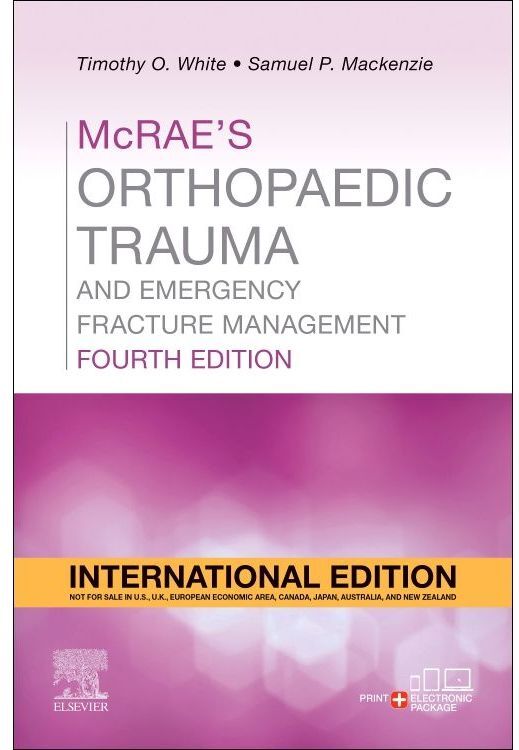
Elsevier McRae's Orthopaedic Trauma and Emergency Fracture Management 4e International EditionMcRae’s Orthopaedic Trauma and Emergency Fracture Management is the essential, best-selling ‘survival guide’ for the orthopaedic surgeon, trainee, resident or practitioner treating injured patients in the Emergency or Orthopaedic Department. This fourth edition has been extensively updated and rewritten, retaining the essence and underlying principles of McRae’s original book, but with new text and illustrations to ensure it remains at the cutting edge. This highly regarded book is a companion to McRae’s Elective Orthopaedics, and together these titles provide complete coverage of orthopaedic surgery as relevant to contemporary practice. Comprehensive coverage of the full range of orthopaedic trauma presentations in the Emergency Department, operating theatre, and outpatient clinic Clear step-by-step illustrations and text guide you through the relevant anatomy, examination, and investigations before you see the patient More than 500 illustrations and 250 x-rays Practical procedures, including fracture and joint reduction and immobilisation, explained step-by-step Careful descriptions of the principals of trauma surgery and individual surgical procedures provide excellent preparation for the trauma meeting and operating theatre Covers postoperative care, complications and follow-up, providing a framework for your fracture clinic New section on theatre preparation and set-up, introducing TULIPS, and helping to manage and prepare for the trauma list New chapter on running an efficient practice33,99 £*Shipping: 2,99 £Secure redirect to the provider
-
What are the principles and implementation of homework?
The principles of homework are to reinforce and extend learning, develop independent study skills, and provide opportunities for students to practice and apply what they have learned in class. Homework should be purposeful, relevant, and manageable for students. It should also be differentiated to meet the needs of individual students. The implementation of homework involves clear communication of expectations, providing adequate time for students to complete assignments, and offering support and feedback. Teachers should also consider the balance of homework with other aspects of students' lives, such as extracurricular activities and family time. Additionally, it is important to regularly review and reflect on the effectiveness of homework assignments and make adjustments as needed. **
-
What do you think about people who stick to principles versus people with strong character and basic principles?
People who stick to principles are often seen as consistent and reliable, as they are committed to following a set of rules or beliefs. On the other hand, individuals with strong character and basic principles may be more adaptable and able to navigate complex situations with integrity. Both approaches have their strengths, and it ultimately depends on the context and individual values as to which is more important. **
-
What do you think about people who stick to principles versus people with strong character and core principles?
People who stick to principles are often seen as consistent and reliable, as they are committed to following a set of beliefs or values. On the other hand, individuals with strong character and core principles are admired for their ability to adapt and make decisions based on their own moral compass. Both types of people have their strengths, and it ultimately depends on the situation as to which approach is more beneficial. **
-
What do you think about people who stick to principles versus individuals with strong character and fundamental principles?
People who stick to principles may be seen as rigid and inflexible, potentially missing out on opportunities for growth and adaptation. On the other hand, individuals with strong character and fundamental principles are more likely to be adaptable and open-minded while still maintaining their core values. It is important to strike a balance between sticking to principles and being open to new perspectives in order to navigate the complexities of life effectively. **
* All prices are inclusive of VAT and, if applicable, plus shipping costs. The offer information is based on the details provided by the respective shop and is updated through automated processes. Real-time updates do not occur, so deviations can occur in individual cases. ** Note: Parts of this content were created by AI.